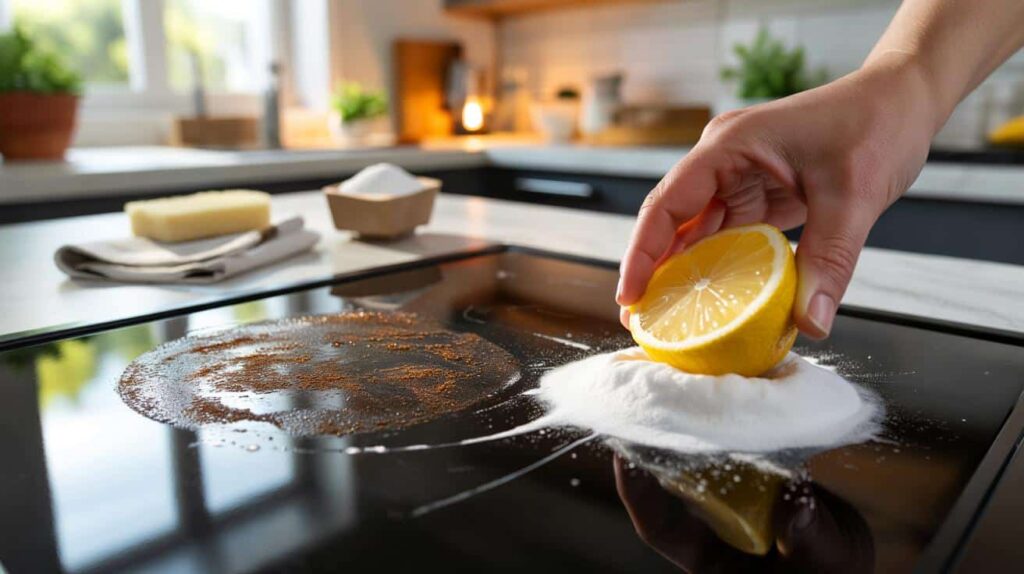
Daily cooking quickly leads to a build-up of grease, starch, and burnt-on residue on the stovetop. Oil splatters, milk or sauces overflow, and food scraps dry and harden. If the surface is only superficially cleaned, a hard layer will form over time that is difficult to remove later.
Instead of expensive chemical cleaners, lemon can be a simple and effective solution. The citric acid it contains helps to dissolve grease, lighten stains, and restore shine to surfaces. Fresh lemons are best, but bottled lemon juice can also be used.
How to clean the stove using only lemon
First, allow the stove to cool completely. Then, remove any loose dirt with a cloth or paper towel. Stubborn residue can be carefully loosened with a scraper.

Then halve a lemon and remove the seeds. Rub the cut side directly onto the stained area in a circular motion. Let the juice soak in for about 2 to 5 minutes. Afterwards, wipe everything off with a damp microfiber cloth and dry the area with a clean cloth.

This method is usually sufficient for fresh stains.
For stubborn dirt: lemon and baking soda
If an older, hardened layer has already formed, lemon can be combined with baking soda. Baking soda has a slightly abrasive effect and enhances the cleaning action.
Sprinkle some baking soda onto half a lemon and rub it over the stained area. A slight fizzing will occur – this is the reaction between the citric acid and the baking soda. Let the mixture sit for 2 to 3 minutes. Then clean the area with a soft sponge and rinse with water. Finally, wipe dry.

A little warm water before cleaning can help to loosen burnt-on residue more easily.
Advantages of this method
- Fewer chemicals
- Affordable and readily available
- Pleasant, fresh scent
- Gentler to the surface
How often should it be cleaned?
- Lightly wipe after each cooking session
- Thorough cleaning 1-2 times per week
Which method is best for which type of dirt?
- Light oil splashes: Rub lemon juice on the surface and wipe with a damp cloth.
- Dried-on stains: Apply lemon juice and wipe off.
- Old hard layer: Use lemon with baking soda
Tips for ceramic and induction hobs
- Do not use steel wool
- Use only fine baking soda
- Always use the scraper at a shallow angle.
- Wipe dry thoroughly after cleaning.
Why does lemon work?
Lemon contains citric acid, which can dissolve grease and limescale. Baking soda provides an additional gentle scrubbing action. Together, they create a simple yet effective cleaning combination.
Also suitable for
- oven
- stainless steel sink
- plastic cutting board
- Limescale stains on the faucet
Important: Do not use on marble or natural stone, as acid can damage the surface.

Conclusion
Lemon is a simple, natural, and practical way to keep your stovetop clean. Regularly removing small residues prevents stubborn stains and saves you from using harsh cleaners.